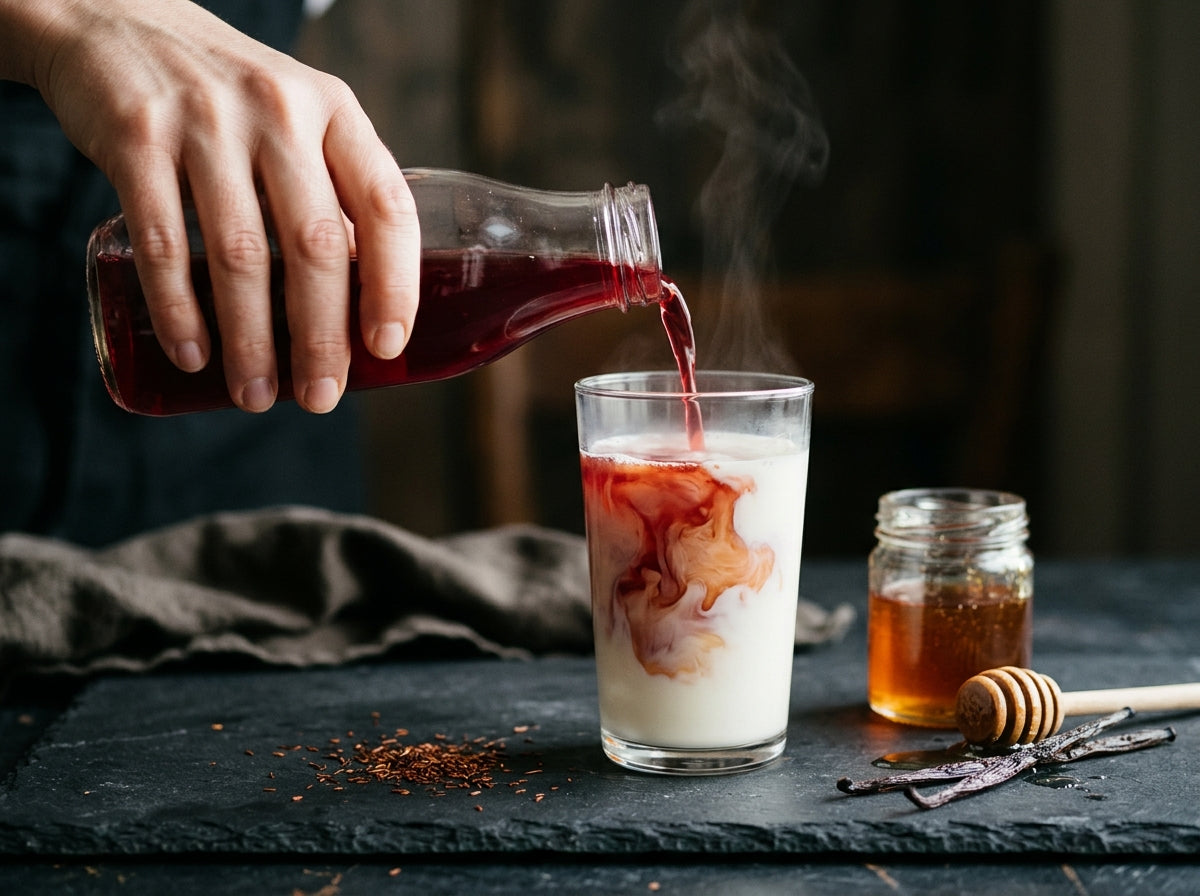
Rooibos Sour
50ml bourbon or brandy · 20ml rooibos concentrate · 20ml lemon · egg white (or aquafaba). Dry-shake, then shake with ice.


R 159.00
Rich, full-flavoured red rooibos, balanced with real honey and vanilla, brewed slowly into a smooth, naturally sweet concentrate.
We start with premium rooibos from the Cederberg, add real honey and vanilla, then brew the whole lot properly. No powdered shortcuts, artificial flavourings or extracts pretending to be the real thing.
The result? A smooth, naturally sweet red latte with deep rooibos character and soft vanilla — and no caffeine, any time of day.
One shot of concentrate, add milk, and you've got an authentic red latte in seconds. Hot or iced. At home or behind a busy café counter.
Sealed bottle. Once opened, refrigerate and use within 4 weeks.
The easy part
Shake and pour
Give the bottle a good shake, then pour 25ml of Doubleshot Rooibos Concentrate.
Add milk
200ml of your favourite milk. For a hot red latte, steam the concentrate and milk together. For iced, pour it over ice.
Enjoy
A smooth, naturally sweet red latte in seconds. No caffeine, so there's no wrong time of day.
We handle the brewing. You handle the pouring.

Fill a glass with ice. 25ml rooibos concentrate, 200ml cold milk. Stir and go.

Your hot red latte, foamed up properly, with a dusting of cinnamon on top.

Warm milk, a splash of rooibos concentrate, a spoon of foam. No caffeine, so nobody has to say no.

Fill a glass with ice. 25ml rooibos concentrate, 150ml orange juice, topped with soda.
Cocktails
No caffeine, so a nightcap is actually a nightcap.
50ml bourbon or brandy · 20ml rooibos concentrate · 20ml lemon · egg white (or aquafaba). Dry-shake, then shake with ice.
30ml rooibos concentrate · 60ml prosecco · 30ml soda over ice, orange slice.
45ml dark rum · 15ml rooibos concentrate · 2 dashes bitters · big cube, orange oils. Skip the rum for a zero-proof version.
40ml brandy · 25ml rooibos concentrate · hot water · lemon. A nightcap that won't keep you up.
45ml spiced rum · 25ml rooibos concentrate · 60ml milk · grated nutmeg.
Your usual rooibos latte with 30ml amaretto stirred through.
The story
Rooibos (Aspalathus linearis) is a needle-leaved shrub from the fynbos, and it grows in exactly one place on earth: the Cederberg mountains north of Cape Town. People have tried it elsewhere. It doesn't take.
That makes the name worth protecting. Like Champagne, rooibos is a protected designation of origin, in South Africa and, since 2021, across the EU. If the leaf didn't grow in the Cederberg, it isn't rooibos.
The Khoi and San knew the plant long before anyone bottled it. In 2019 the industry signed the first agreement of its kind in the country, paying a share of every kilogram sold back to their communities. A hundred years late, but the right call.
In 1904 a Clanwilliam trader named Benjamin Ginsberg worked out how to cure the wild leaf properly, borrowing the barrel method used for Chinese black tea, and started selling it. Rooibos had a trade.
What it didn't have was a farm. Nobody could get the seed to sprout. In 1930 the local district surgeon, Dr Le Fras Nortier, took it on as a hobby. He discovered the seed needed scratching before it would germinate in the acid, sandy soil, and he paid villagers five pounds a matchbox to collect it. One elderly Khoi woman found the cheat: she followed the ants to their nest and raided the granary. For a while rooibos seed was the most expensive vegetable seed in the world.
Clanwilliam is still the capital. Most of the world's rooibos comes from a couple of hours' drive around it.
Picked green, the leaf is cut fine, bruised and left to oxidise in heaps in the Cederberg sun. That's what turns it from green to deep amber-red and builds the natural sweetness. The old way was a flat rock and a wooden mallet. The idea hasn't changed.
No roasting, no additives. Just leaf, air and sunshine. Green rooibos is the same plant left unoxidised. Lighter, grassier, and not what we're after here.
There's no caffeine in rooibos and there never was. Nothing removed, nothing processed out. It's also low in tannin, so it doesn't turn bitter or astringent the way over-steeped tea does. Forget it in the pot and it just gets redder.
It's the cup you can drink at 4pm, at midnight, or hand to a kid, without a second thought.
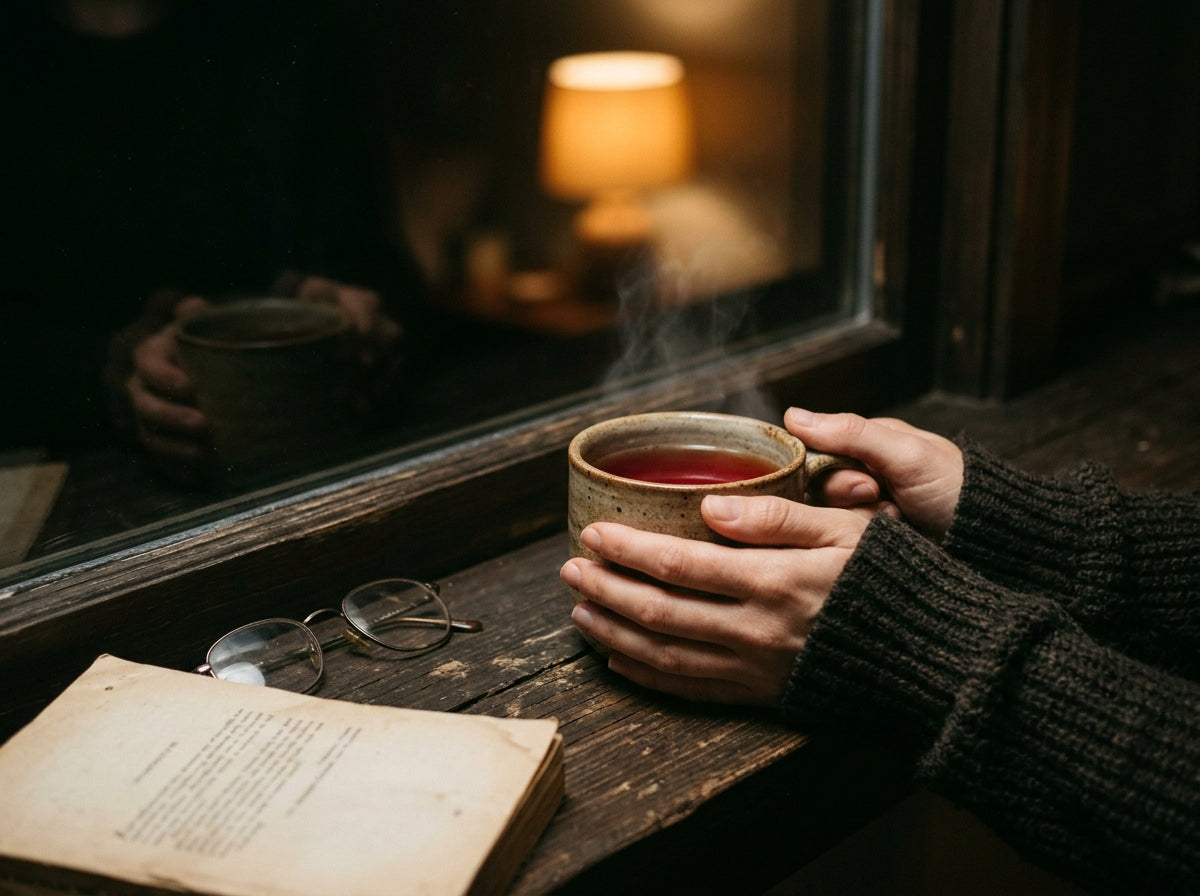
Here's the South African contribution to café culture. Somewhere around 2005, someone in Cape Town ground rooibos fine and ran it through an espresso machine. Out came a red shot with a crema. Add steamed milk and you had the red cappuccino, and within a few years it was on café menus across the country.
We've done the same thing without the machine. The leaf, the strength, the milk. Minus the grinding, the tamping and the cleaning up.
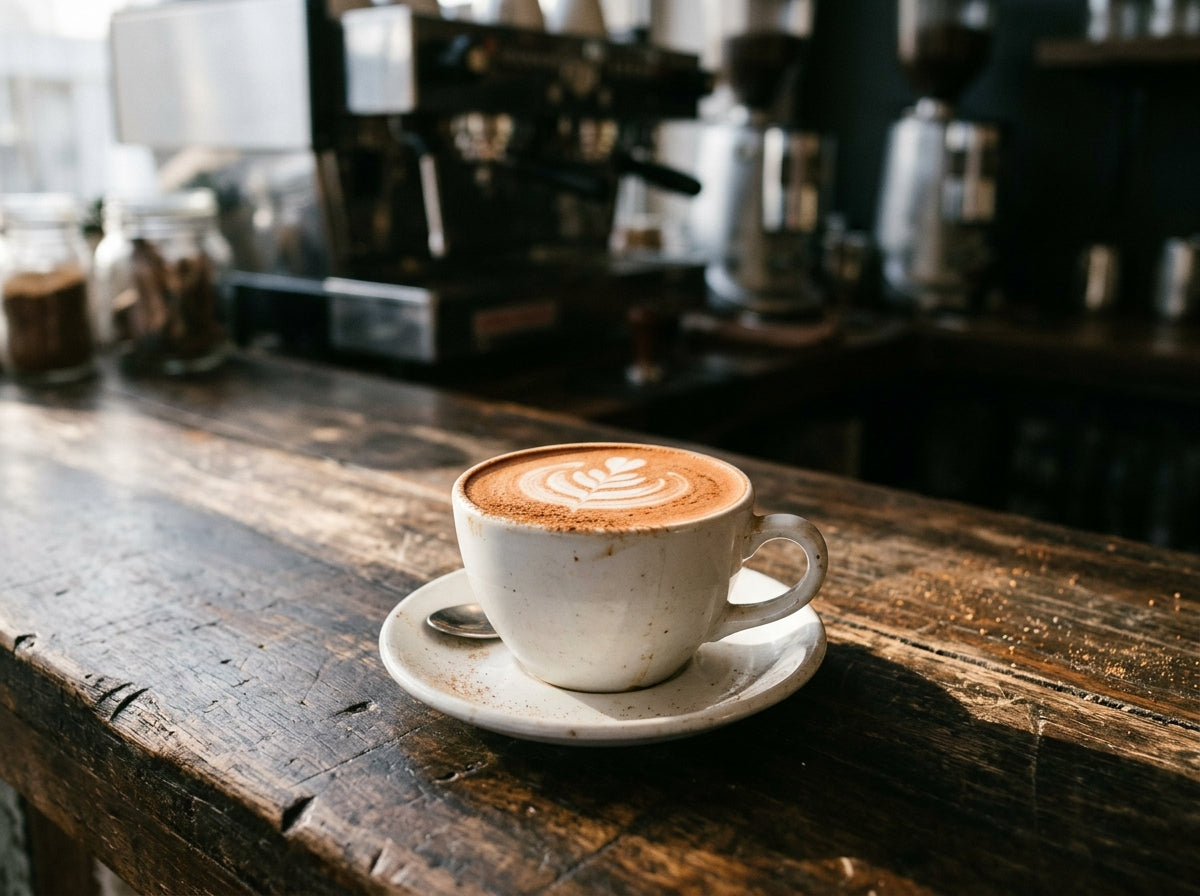
We brew it strong enough to stand up to milk, then round it out with the two things rooibos has always gone best with: real honey and real vanilla. Not syrups, not flavourings, not extracts doing an impression. Then we bottle it cold.
One shot into milk. Steam it or ice it. A red latte in under a minute, from a bush that grows in one corner of one country.