


Chanoka
Buttery · Umami · Macadamia
From R 605.00

Stone-milled tencha from Japanese tea gardens. We work with smaller growers across Japan: the ones quietly producing exceptional tea, for the matcha we want to drink ourselves.
Ceremonial-grade only. Whisk it neat, or build it into a latte. It's good enough for both. Different estates, different character.
Nothing matches that combination yet.
We roast in small seasonal batches, so the range shifts. Clear a filter or two, or join the list to hear when new coffees land.
The short version
Most green tea, you steep and throw away the leaves. Matcha, you drink the leaf itself, stone-ground so fine it stays suspended in water. That's the whole difference, and it's why matcha tastes of so much more than a cup of green tea. You're not drinking an infusion. You're drinking the leaf.
But not just any leaf. Matcha starts life as tencha, a leaf grown, picked and processed specifically to be ground. Get that part wrong and no amount of grinding saves it. Get it right and you get the vivid green, the smooth body, and the savoury depth that makes matcha matcha.
Here's how it's made: four steps, and each one matters.
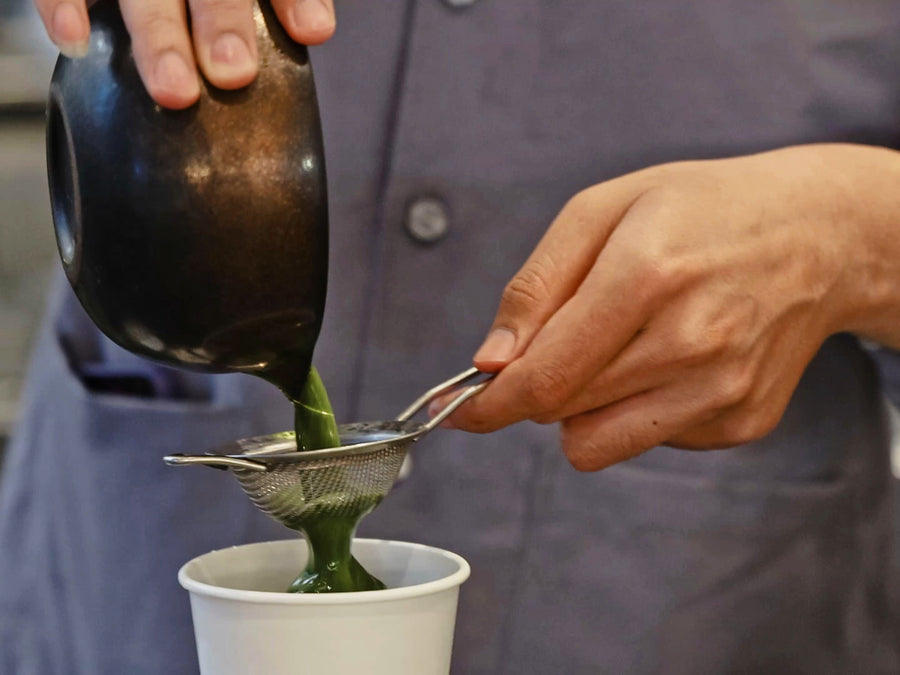
From leaf to powder
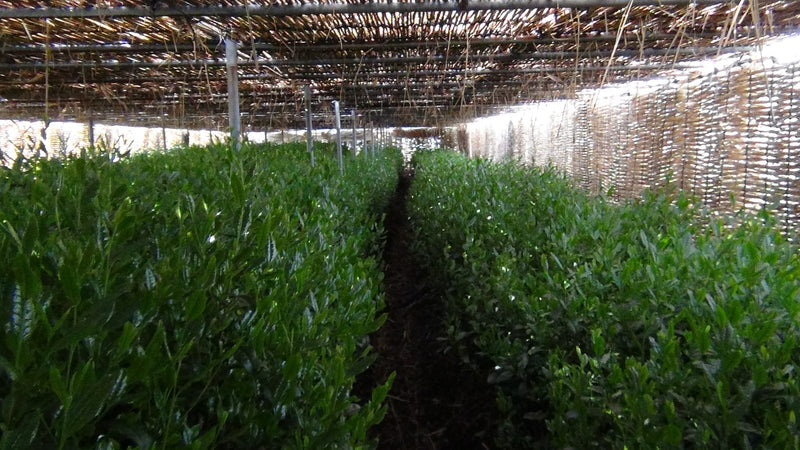
Covered from the sun for the final weeks, the leaf floods with chlorophyll and L-theanine, building the deep green, the sweetness and the savoury umami.
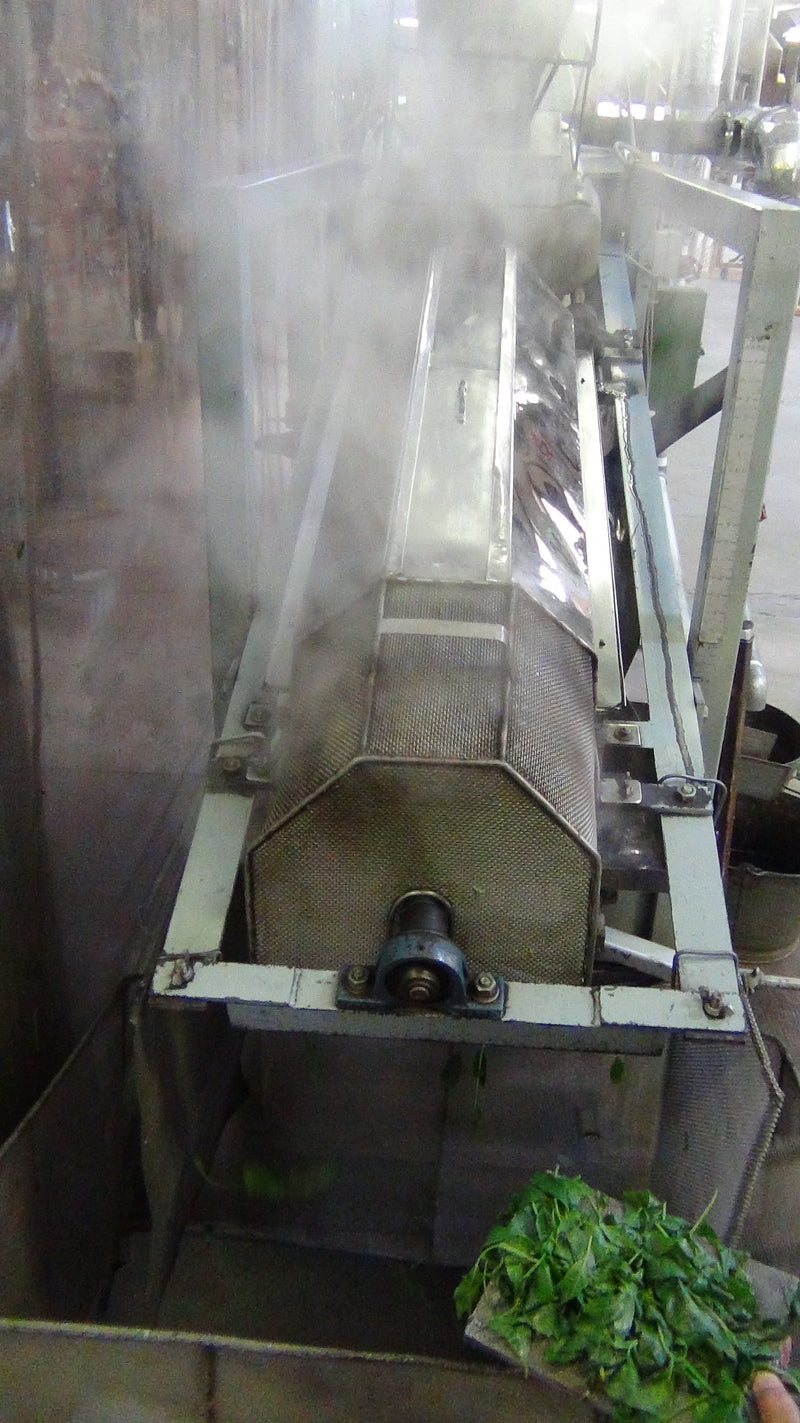
Steamed within hours of picking to lock in the colour and fresh green character before the leaf can oxidise.
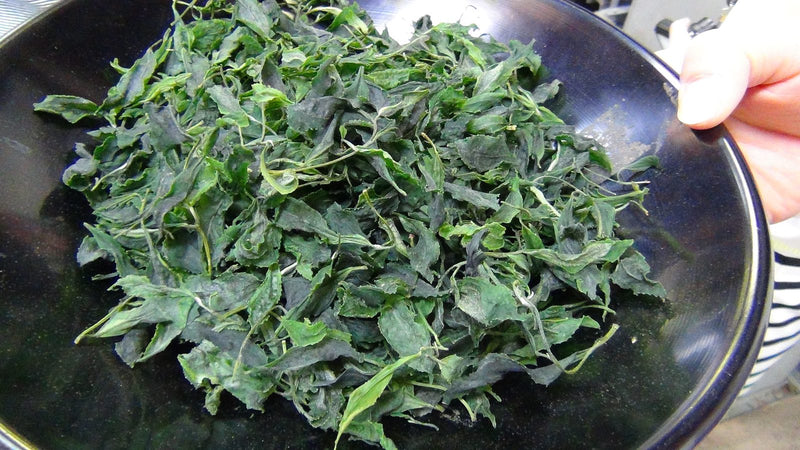
Dried flat, then stems and veins stripped away, leaving pure, flaky leaf called tencha, ready for the stone.

Two granite stones turn slow and cool, grinding tencha finer than flour. The step most skip, and the whole point.
We stone-mill ours. It's slower, it's fussier, and it's the whole point.
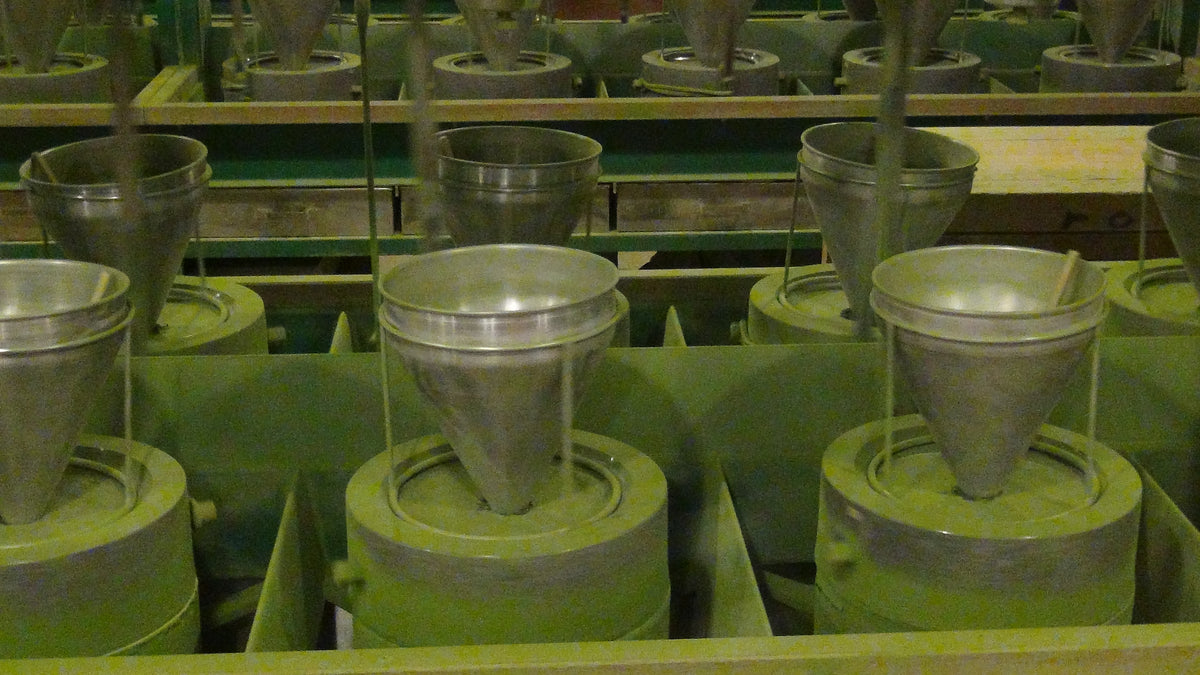

The granite mills at work: hand-carved, imported, slow
Why we mill it here
Here's the thing nobody selling pre-ground matcha wants you to think about: matcha starts dying the moment it's milled. Ground leaf has enormous surface area, and it gives up its colour, aroma and flavour to air and light faster than almost anything. A tin that was ground six months and one shipping container ago is a shadow of what it was.
So we don't buy it ground. We bring in tencha, the dried leaf, stable and travel-hardy, from growers across Japan, and mill it ourselves, in small batches, on a traditional hand-carved granite stone mill, imported for exactly this job. It turns slow and cool, around thirty grams an hour, because speed makes heat, and heat kills the aroma and dulls the green.
You can taste the difference. Milled fresh, matcha is vivid green and smooth-bodied. Pre-ground and shipped, it's grittier, flatter, less alive. Storied estates give us exceptional leaf. Milling it here is how we keep it exceptional.
Where it comes from
We don't buy from a broker's warehouse. We source tencha from storied, traceable estates across Japan's matcha-growing regions, and the lineup rotates with the seasons. Anyone can sell you "Japanese matcha." Whatever's in the tin, we can tell you whose garden it grew in.
The grower, the region and the character live on each matcha's own page. Meet them there.
One question
[Placeholder] Tell us how you'll make it, and we'll point you at the right tin.
Buttery · Umami · Macadamia
From R 605.00
Nutty · Savoury · Smooth
From R 420.00
Sweet · Creamy · Cashew
From R 420.00
Sweet · Nutty · Smooth
From R 435.00
Bright · Umami · Structured
From R 475.00
Buttery · Umami · Macadamia
From R 605.00
Sweet · Creamy · Cashew
From R 420.00
Bright · Umami · Structured
From R 475.00
Buttery · Umami · Macadamia
From R 605.00
Nutty · Savoury · Smooth
From R 420.00
Sweet · Creamy · Cashew
From R 420.00
Sweet · Nutty · Smooth
From R 435.00
Nutty · Savoury · Smooth
From R 420.00
Get it right
Usucha: the everyday cup
Sift 2 g, add 70 ml at 75 to 80°C, whisk 15 seconds.
Koicha: the thick one
Thick and kneaded: more powder, less water, a glossy paste. Not everyday. A moment.
Latte: the honest truth
Whisk a small, strong shot first, then pour over milk, hot or iced.
Water temperature matters more than anything else: too hot and matcha turns bitter. Let the kettle sit two minutes off the boil, 75 to 80°C.
Since you asked
Matcha's genuinely full of the good things: antioxidants, and that L-theanine the shade builds, which pairs with the caffeine to give you a calm, level focus instead of a jittery spike. It's a real effect and it's a nice bonus.
But we're not going to sell it to you as a supplement. Drink it because it's delicious. The rest is a happy side effect.